
Best Collagen for Women Over 50: A Menopause-Friendly Guide (2026)
Collagen for menopause: why it matters after 50, what changes in your body, and the collagen supplement worth trying for skin, joints & hair.
VitalAura Team
7/26/20264 min read


Somewhere around 50, a lot of women start noticing the same thing at roughly the same time: skin that used to bounce back now takes a little longer, joints that never used to complain start making themselves known, and hair that felt thick for decades starts feeling... thinner. If that sounds familiar, there's a good chance it's connected to something happening well below the surface — a sharp drop in collagen, driven by menopause.
This isn't just bad luck or "getting older" in some vague sense. There's a specific hormonal reason for it, and understanding it makes it a lot easier to know what actually helps.
Why Menopause Hits Collagen So Hard
Collagen production has been quietly declining since your mid-20s — that part happens to everyone, slowly, regardless of gender. But for women, menopause adds a second, much steeper drop on top of that gradual one.
The reason comes down to oestrogen. Oestrogen plays a direct role in stimulating collagen production, so when oestrogen levels fall during perimenopause and menopause, collagen synthesis slows down right along with it. Some research estimates women can lose up to 30% of their skin's collagen within the first five years after menopause — which explains why changes in this stage of life can feel sudden rather than gradual, even though the underlying decline has actually been building for years.
This is really the heart of why collagen for menopause has become such a specific, commonly searched topic, rather than just falling under general "anti-aging" advice.
What Actually Changes, and Why
Skin. Thinner, less elastic skin, and a drop in hydration, are some of the most noticeable menopause-related changes — and they're driven almost entirely by this oestrogen-collagen connection.
Joints. Cartilage relies on collagen for its structure, so as levels drop, joint stiffness and reduced mobility become more common. Many women describe this as mornings feeling "creakier" than they used to.
Hair and nails. Keratin production draws on some of the same amino acid building blocks as collagen, so hair thinning and nail brittleness often show up around the same time as skin changes.
Bone density. This one gets less attention, but it matters — collagen makes up a significant part of the bone's structural framework, and declining levels during menopause contribute to the bone density loss that becomes a bigger concern in this stage of life.
Can Collagen Supplements Actually Help?
The research here is more encouraging than for a lot of supplements marketed at this age group. A clinical review covering nearly 1,000 participants across multiple trials found that 12 weeks of hydrolyzed collagen peptide supplementation led to measurable improvements in skin moisture and elasticity — and importantly, several of these trials specifically included postmenopausal women, not just a general adult population.
Joint-related research points in a similar direction: reviews of collagen supplementation have found it can meaningfully ease osteoarthritis-related pain and stiffness, though this tends to take longer to show up — usually 3 to 5 months of consistent use rather than weeks.
Worth being upfront about: collagen isn't going to reverse menopause or replace hormone therapy, and it works best as one part of a broader approach that also includes diet, movement, and — for some women — a conversation with their doctor about hormonal options. It's a support, not a solution on its own.
What to Look For in a Collagen Supplement After 50
Not every collagen product is built the same way, and a few features matter more at this stage:
Hydrolyzed peptides — broken down into smaller molecules that are easier for your body to absorb, especially important since absorption naturally slows with age
Added vitamin C — your body needs it to actually synthesize collagen, so a formula that includes it does more of the work for you
Marine or bovine source, Type I and III — these are the collagen types most studied for skin and joint benefits
No excessive fillers or added sugar — a longer ingredient list isn't necessarily a better one
Our Pick for Women Over 50
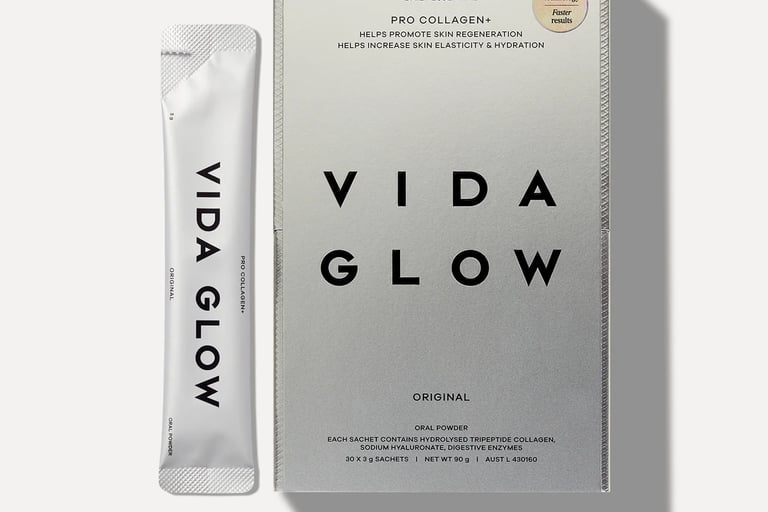
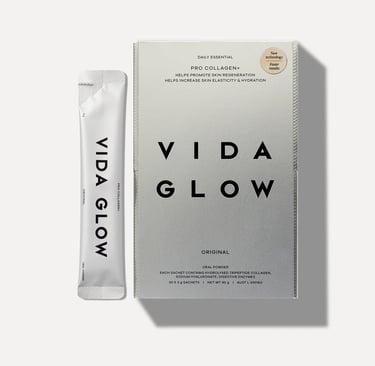
If you're looking for a place to start, Vida Glow Pro Collagen+ Hydrolysed Marine Collagen is worth a look. It's a hydrolysed marine collagen formulated specifically to support skin hydration and smooth the appearance of fine lines — exactly the areas most affected by the oestrogen drop we covered above. It comes in individual sachets, which makes it simple to build into a daily routine without measuring out powder, and it currently holds a 4.5-star rating on Amazon Australia.
👉 Check current price on Amazon Australia
As with any collagen supplement, give it at least 8-12 weeks before judging whether it's making a difference — that's roughly the timeline the research supports.
Frequently Asked Questions
Does collagen help with menopause symptoms like hot flashes? Not directly — collagen supports structural tissues like skin, joints, and bone, but it doesn't influence the hormonal mechanisms behind hot flashes or mood changes. For those symptoms, it's worth speaking with a doctor about other options.
Is it too late to start collagen after menopause has already begun? No. Collagen decline continues throughout post-menopause, so starting later still provides support going forward, even if it can't restore what's already been lost.
Should I combine collagen with HRT? There's no known conflict between the two, but it's a good idea to mention any supplement you're taking to your doctor, especially if you're on hormone therapy.
If you want to compare more options across different collagen types and price points, our full guide — Best Collagen for Women Australia 2026 — breaks down what to look for regardless of your age or stage of life. And if you're curious about the full range of collagen's benefits beyond menopause specifically, Collagen Benefits for Women Over 30 covers the science in more depth.
VitalAura
A wellness blog focused on healthy living, gut health, food intolerances, and realistic wellness for women after 30.
Contact
Newsletter
© 2026 VitalAura. All rights reserved.