
The Best Gluten-Free Products I Actually Use (Honest Review)
A real list of gluten-free foods and supplements I use daily as a celiac woman living in Australia. Honest reviews, practical tips, and what actually works.
Giselle Meireles
5/22/20266 min read
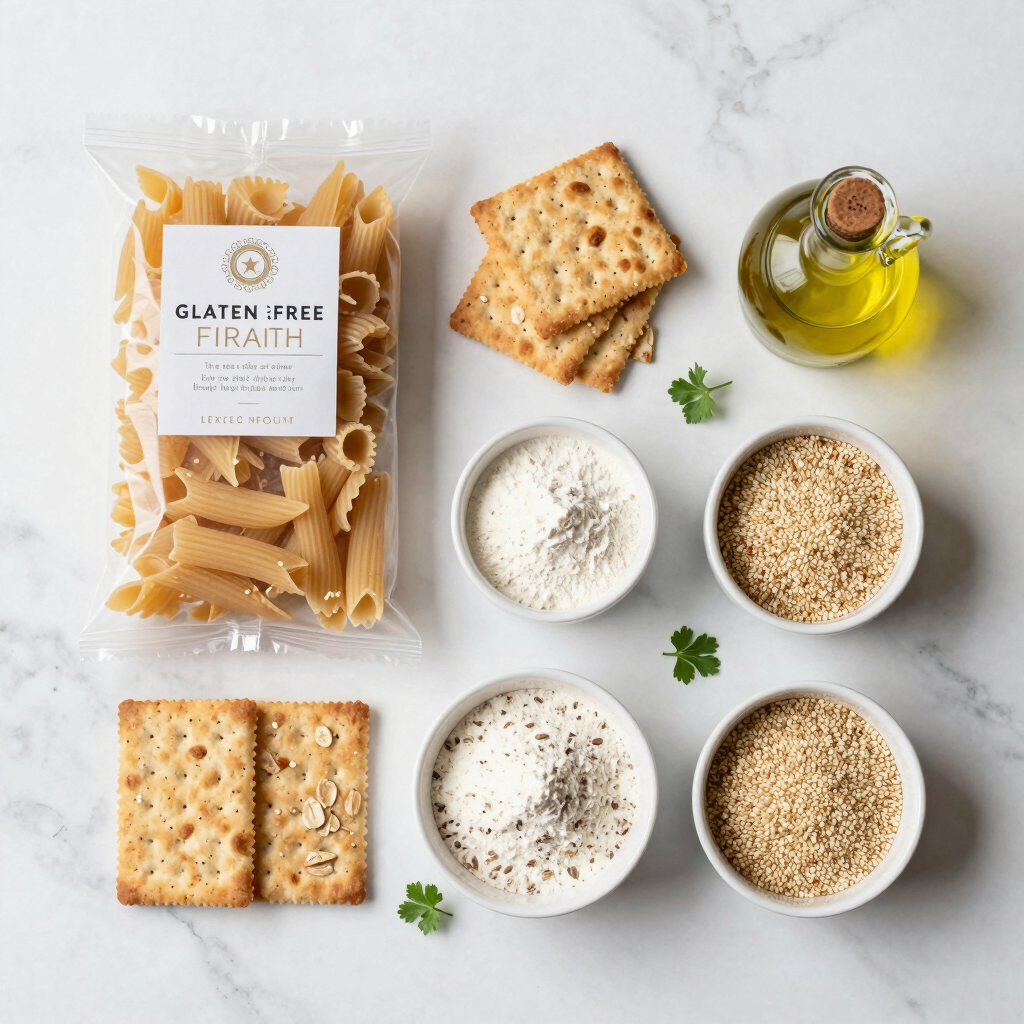
Real Food Doesn't Have a Gluten-Free Label — And That's Where I Start
Before we talk about products, I want to say something that changed the way I think about eating with celiac disease:
Real, whole food is naturally gluten-free.
Rice, beans, chicken, fish, eggs, fruits, vegetables, legumes — none of these contain gluten. The foundation of a healthy celiac diet isn't a pantry full of "free-from" products. It's building meals around real ingredients that your body recognises and absorbs well.
That said — I'm human. I want bread. I want pasta. I want a slice of cake that doesn't taste like cardboard. And after years of trial and error, I've found a handful of products that genuinely deliver.
This is my honest list — what I actually use, why I use it, and what you should know before buying.
🛒 The Gluten-Free Pantry Staples I Trust
1. Certified Gluten-Free Oats
Why I use it: Regular oats are almost always contaminated with gluten through cross-contamination during processing. For celiacs, this matters enormously — even trace amounts can trigger an immune response and damage the intestinal lining.
Certified gluten-free oats go through rigorous testing to ensure they meet safe thresholds. I use them for breakfast porridge, smoothies, and baking.
What to look for: The words "certified gluten-free" on the packaging — not just "gluten-free friendly" or "may contain traces." The certification matters.
👉 [Certified Gluten-Free Oats on Amazon Australia]
2. Gluten-Free Flour Mix (for baking)
Why I use it: Finding a reliable all-purpose gluten-free flour mix was a game changer for me. A good blend replaces regular wheat flour in most baking recipes — cakes, muffins, pancakes — without the gummy texture that many GF flours produce alone.
Look for a mix that combines rice flour, tapioca starch, and potato starch for the best results.
👉 [Gluten-Free Flour Mix on Amazon Australia]
3. Almond Flour
Why I use it: Almond flour is one of my favourite alternatives for baking. It's naturally gluten-free, high in protein and healthy fats, and gives baked goods a moist, rich texture. I use it for cookies, cakes, and as a crumbing alternative for chicken or fish.
It's also a great option for those managing blood sugar, as it's much lower in carbohydrates than wheat flour.
👉 [Almond Flour on Amazon Australia]
4. Tapioca Flour
Why I use it: Tapioca is a staple in Brazilian cuisine — and it translates beautifully into a gluten-free lifestyle. I use tapioca flour to make crepes, thicken sauces, and add chewiness to baked goods. It's also the base for traditional Brazilian tapioca flatbread, which has become one of my favourite quick breakfasts.
👉 [Tapioca Flour on Amazon Australia]
5. Rice Crackers
Why I use it: For snacking, rice crackers are my go-to. They're light, versatile, and naturally gluten-free. I use them with avocado, hummus, or just on their own. Just make sure the brand you choose is certified gluten-free — some rice crackers are processed in facilities that also handle wheat.
👉 [Certified Gluten-Free Rice Crackers on Amazon Australia]
💊 Supplements Every Celiac Should Know About
This section is close to my heart — because no one told me about these when I was first diagnosed. Years of undiagnosed celiac disease leaves the gut lining damaged and the body severely depleted. Even after going gluten-free, replenishing what was lost takes time and targeted support.
These are the supplements I take and why — always in consultation with my doctor.
> ⚠️ Always consult your GP or specialist before starting any supplement protocol. The following is based on my personal experience and general research, not medical advice.
1. Vitamin B12
Why celiacs need it: The terminal ileum — the section of the small intestine responsible for absorbing B12 — is often damaged in celiac disease. Low B12 can cause extreme fatigue, brain fog, nerve issues, and mood disturbances. This was one of my first deficiencies identified.
Research note: Studies have shown that B12 deficiency is significantly more prevalent in people with untreated celiac disease compared to the general population, due to malabsorption in the damaged small intestine.¹
👉 [Vitamin B12 supplement on Amazon Australia]
2. Vitamin D
Why celiacs need it: Vitamin D deficiency is extremely common in celiac disease. It's fat-soluble and depends on healthy intestinal absorption — which is compromised when the gut lining is damaged. Low Vitamin D affects bone density, immunity, mood, and energy.
Living in Australia you'd think sun exposure would be enough — but with gut malabsorption, supplementation is often still necessary.
Research note: Research published in gastroenterology journals consistently shows that newly diagnosed celiac patients have significantly lower Vitamin D levels than healthy controls, regardless of sun exposure.²
👉 [Vitamin D3 supplement on Amazon Australia]
3. Vitamin C
Why celiacs need it: Vitamin C is a powerful antioxidant that supports immune function and gut healing. It also plays a critical role in iron absorption — which brings me to the next supplement.
Pro tip: Always take your iron supplement together with Vitamin C. It significantly increases absorption. This is something my doctor told me early on and it made a real difference.
👉 [Vitamin C supplement on Amazon Australia]
4. Iron (with Vitamin C)
Why celiacs need it: Iron deficiency was the first sign that something was seriously wrong with my body. My ferritin level came back at 6 — practically non-existent. Iron is absorbed in the upper small intestine — exactly where celiac damage occurs first.
Even after going gluten-free, many celiacs need iron supplementation for months or years while the gut heals and absorption normalises.
Important: Take iron with Vitamin C and away from coffee, tea, or dairy, which can inhibit absorption. And always get your levels tested before supplementing — too much iron is also harmful.
Research note: Iron deficiency anaemia is one of the most common presentations of celiac disease in adults, particularly in women, and is often the first symptom that leads to diagnosis.³
👉 [Iron supplement on Amazon Australia]
5. Glutamine
Why celiacs need it: This is the supplement I wish someone had told me about from day one. L-Glutamine is an amino acid that serves as the primary fuel source for intestinal cells. It plays a critical role in repairing and maintaining the gut lining — making it especially important for celiacs whose intestinal villi have been damaged.
After starting glutamine, I noticed a real difference in my digestive comfort and energy levels. It's not a miracle cure, but it's a meaningful part of gut healing support.
Research note: L-Glutamine has been studied for its role in maintaining intestinal barrier integrity and supporting mucosal healing. While research specific to celiac disease is ongoing, its role in gut lining repair is well established in gastroenterology literature.⁴
👉 [L-Glutamine powder on Amazon Australia]
6. Probiotics
Why celiacs need it: The gut microbiome of someone with celiac disease is often significantly disrupted — even after going gluten-free. A quality probiotic helps restore beneficial bacteria, supports immune function, reduces bloating, and improves overall gut comfort.
Look for a multi-strain probiotic with Lactobacillus and Bifidobacterium strains, ideally refrigerated for maximum potency.
👉 [Probiotic supplement on Amazon Australia]
7. Creatine
Why celiacs need it: This one surprises people. Creatine is often associated with gym performance — but for celiac women, it has an additional layer of relevance. Malnutrition and muscle loss are common in long-term undiagnosed celiac disease. Creatine supports muscle recovery, energy production, and cognitive function.
I added creatine to my routine after noticing how much muscle tone I had lost during my worst period of illness. It's been a valuable part of my recovery.
👉 [Creatine Monohydrate on Myprotein]
🥗 Want a Complete Meal Planning System?
Getting the right products is one piece of the puzzle. But knowing how to build balanced, nourishing meals consistently — especially with dietary restrictions — is another challenge entirely.
I personally recommend the Well Nourished program by Georgia Harding, an Australian naturopath. Her whole food approach to meal planning is practical, realistic, and works beautifully alongside a gluten-free lifestyle.
👉 [Check out Well Nourished here]
Final Thoughts
Living with celiac disease means being more intentional about what goes into your body — but it doesn't mean deprivation. With the right pantry staples and targeted supplements, you can eat well, heal your gut, and feel genuinely good again.
Start with the real food foundation. Add the supplements your body needs. And be patient with yourself — healing takes time.
If you found this helpful, save it and share it with someone who might need it. And if you have questions about any of these products, drop them in the comments — I read every single one.
Next read: [5 Supplements That Helped My Gut Heal After Celiac Diagnosis →]
Disclaimer: This post contains affiliate links. If you purchase through my links, I may earn a small commission at no extra cost to you. I only recommend products I personally use and trust. This post is based on personal experience and general research — always consult a qualified health professional for medical advice.
References:
Dickey W, et al. Homocysteine and related B-vitamin deficiencies in celiac disease. Digestive Diseases and Sciences, 2008.
Valente FX, et al. Vitamin D deficiency in celiac disease. Journal of Human Nutrition and Dietetics, 2015.
Tye-Din JA. Iron deficiency anaemia and celiac disease. Medical Journal of Australia, 2016.
Kim MH, Kim H. The roles of glutamine in the intestine and its implication in intestinal diseases. International Journal of Molecular Sciences, 2017.
VitalAura
A wellness blog focused on healthy living, gut health, food intolerances, and realistic wellness for women after 30.
Contact
Newsletter
© 2026 VitalAura. All rights reserved.